text #4,
text #5score
text #6mask decoder
text #1image
text #2encoder
text #7,
text #8score
text #9conv
text #10prompt encoder
text #3image
text #11image
text #12,
text #13score
text #14embedding mask
text #15points
text #16box
text #17text
text #18valid masks
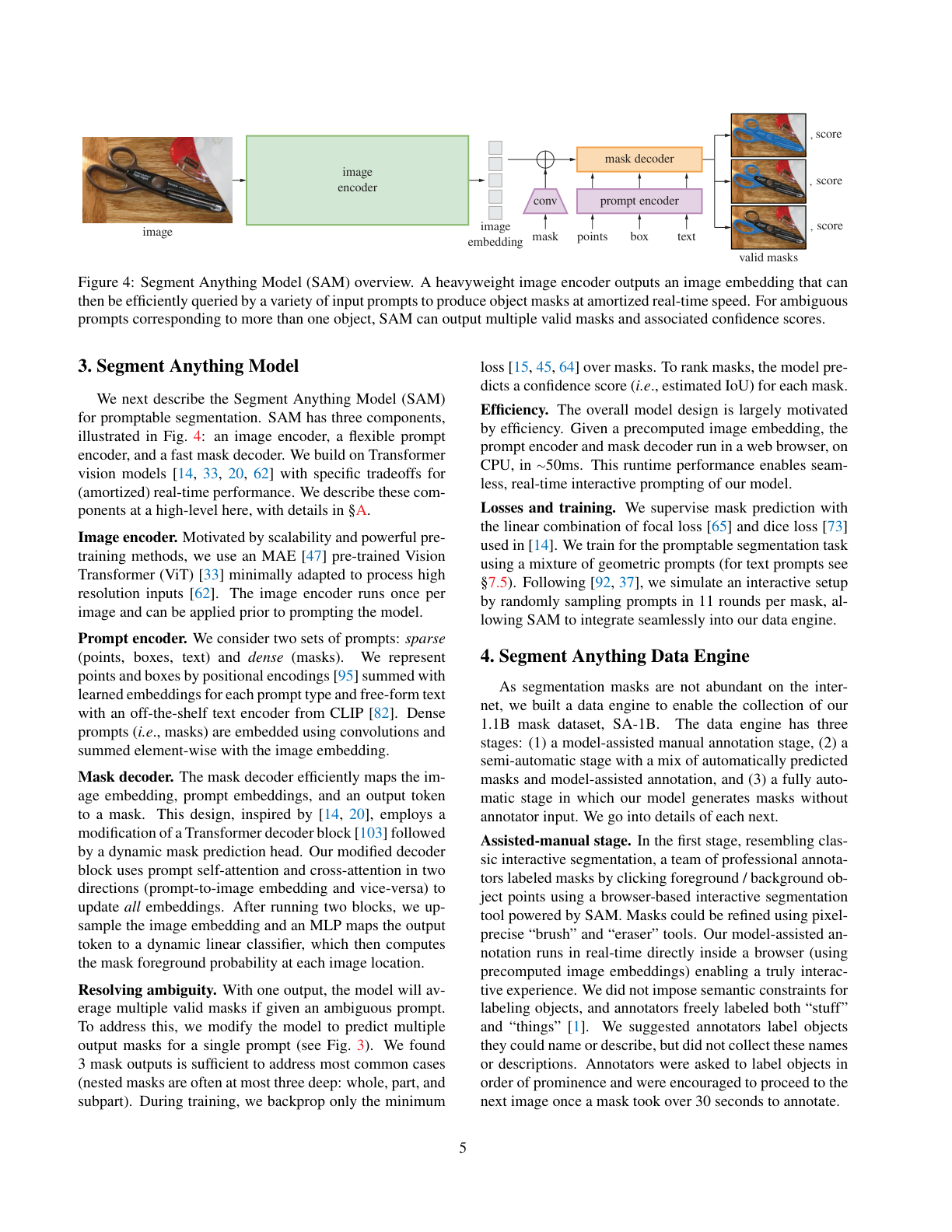
text #19Figure 4: Segment Anything Model (SAM) overview. A heavyweight image encoder outputs an image embedding that can
text #20then be efficiently queried by a variety of input prompts to produce object masks at amortized real-time speed. For ambiguous
text #21prompts corresponding to more than one object, SAM can output multiple valid masks and associated confidence scores.
text #223. Segment Anything Model
text #61loss [15, 45, 64] over masks. To rank masks, the model pre-
text #62dicts a confidence score (i.e., estimated IoU) for each mask.
text #23We next describe the Segment Anything Model (SAM)
text #63Efficiency. The overall model design is largely motivated
text #24for promptable segmentation. SAM has three components,
text #64by efficiency. Given a precomputed image embedding, the
text #25illustrated in Fig. 4: an image encoder, a flexible prompt
text #65prompt encoder and mask decoder run in a web browser, on
text #26encoder, and a fast mask decoder. We build on Transformer
text #66CPU, in ∼50ms. This runtime performance enables seam-
text #27vision models [14, 33, 20, 62] with specific tradeoffs for
text #67less, real-time interactive prompting of our model.
text #28(amortized) real-time performance. We describe these com-
text #29ponents at a high-level here, with details in §A.
text #68Losses and training. We supervise mask prediction with
text #69the linear combination of focal loss [65] and dice loss [73]
text #30Image encoder. Motivated by scalability and powerful pre-
text #70used in [14]. We train for the promptable segmentation task
text #31training methods, we use an MAE [47] pre-trained Vision
text #71using a mixture of geometric prompts (for text prompts see
text #32Transformer (ViT) [33] minimally adapted to process high
text #72§7.5). Following [92, 37], we simulate an interactive setup
text #33resolution inputs [62]. The image encoder runs once per
text #73by randomly sampling prompts in 11 rounds per mask, al-
text #34image and can be applied prior to prompting the model.
text #74lowing SAM to integrate seamlessly into our data engine.
text #35Prompt encoder. We consider two sets of prompts: sparse
text #754. Segment Anything Data Engine
text #36(points, boxes, text) and dense (masks).
text #37We represent
text #38points and boxes by positional encodings [95] summed with
text #76As segmentation masks are not abundant on the inter-
text #39learned embeddings for each prompt type and free-form text
text #77net, we built a data engine to enable the collection of our
text #40with an off-the-shelf text encoder from CLIP [82]. Dense
text #781.1B mask dataset, SA-1B.
text #79The data engine has three
text #41prompts (i.e., masks) are embedded using convolutions and
text #80stages: (1) a model-assisted manual annotation stage, (2) a
text #42summed element-wise with the image embedding.
text #81semi-automatic stage with a mix of automatically predicted
text #43Mask decoder. The mask decoder efficiently maps the im-
text #82masks and model-assisted annotation, and (3) a fully auto-
text #44age embedding, prompt embeddings, and an output token
text #83matic stage in which our model generates masks without
text #45to a mask. This design, inspired by [14, 20], employs a
text #84annotator input. We go into details of each next.
text #46modification of a Transformer decoder block [103] followed
text #85Assisted-manual stage. In the first stage, resembling clas-
text #47by a dynamic mask prediction head. Our modified decoder
text #86sic interactive segmentation, a team of professional annota-
text #48block uses prompt self-attention and cross-attention in two
text #87tors labeled masks by clicking foreground / background ob-
text #49directions (prompt-to-image embedding and vice-versa) to
text #88ject points using a browser-based interactive segmentation
text #50update all embeddings. After running two blocks, we up-
text #89tool powered by SAM. Masks could be refined using pixel-
text #51sample the image embedding and an MLP maps the output
text #90precise “brush” and “eraser” tools. Our model-assisted an-
text #52token to a dynamic linear classifier, which then computes
text #91notation runs in real-time directly inside a browser (using
text #53the mask foreground probability at each image location.
text #92precomputed image embeddings) enabling a truly interac-
text #54Resolving ambiguity. With one output, the model will av-
text #93tive experience. We did not impose semantic constraints for
text #55erage multiple valid masks if given an ambiguous prompt.
text #94labeling objects, and annotators freely labeled both “stuff”
text #56To address this, we modify the model to predict multiple
text #95and “things” [1].
text #96We suggested annotators label objects
text #57output masks for a single prompt (see Fig. 3). We found
text #97they could name or describe, but did not collect these names
text #583 mask outputs is sufficient to address most common cases
text #98or descriptions. Annotators were asked to label objects in
text #59(nested masks are often at most three deep: whole, part, and
text #99order of prominence and were encouraged to proceed to the
text #60subpart). During training, we backprop only the minimum
text #100next image once a mask took over 30 seconds to annotate.
text #1015
image #102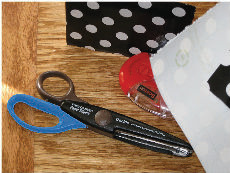
image #103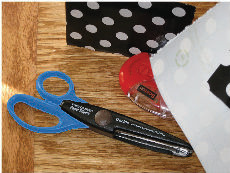
image #104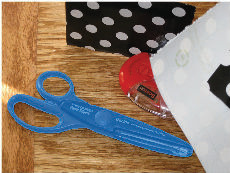
image #105
shape #106
shape #107
shape #108
shape #109
shape #110
shape #111
shape #112
shape #113
shape #114
shape #115
shape #116
shape #117
shape #118
shape #119
shape #120
shape #121
shape #122
shape #123
shape #124
shape #125
shape #126
shape #127
shape #128
shape #129
shape #130
shape #131
shape #132
shape #133
shape #134
shape #135
shape #136
shape #137
shape #138
shape #139
shape #140
shape #141
shape #142
shape #143
shape #144
shape #145
shape #146
shape #147
shape #148
shape #149
shape #150